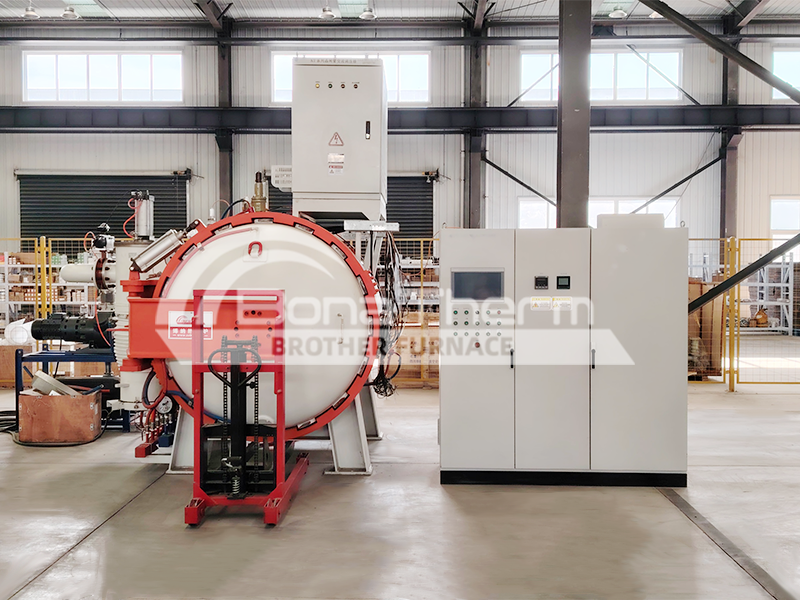
How Does a Vacuum Induction Melting Furnace Work? Working Principle & Basics
- By: Brother Furnace
- 2026-04-21 02:26
Are you using a vacuum induction melting furnace?
Their unique operating principle combines electromagnetic induction heating with vacuum-environment control, ensuring efficient melting and high-quality metal refining—something ordinary furnaces can’t match.
Core Concepts of Vacuum Induction Melting Furnace
To understand how a VIM furnace works, it’s important to break down its two core components: electromagnetic induction heating and the vacuum environment.
Electromagnetic Induction Heating: This is the VIM furnace’s primary heating method. It relies on Faraday’s law of electromagnetic induction and the Joule heating effect to generate heat directly within the metal itself, rather than heating from the outside in.
Vacuum Environment: The entire melting process occurs in a high-vacuum environment. This eliminates contamination from atmospheric gases and creates ideal conditions for degassing and removing impurities from the metal.
Detailed Working Principle of the Vacuum Induction Melting Furnace
A VIM furnace’s operation can be split into four key, interconnected stages.
The entire process is controlled by a precision electrical system, which ensures accurate regulation of temperature, vacuum levels, and other critical parameters.
1. Preparatory Stage: Vacuum Creation and Furnace Charging
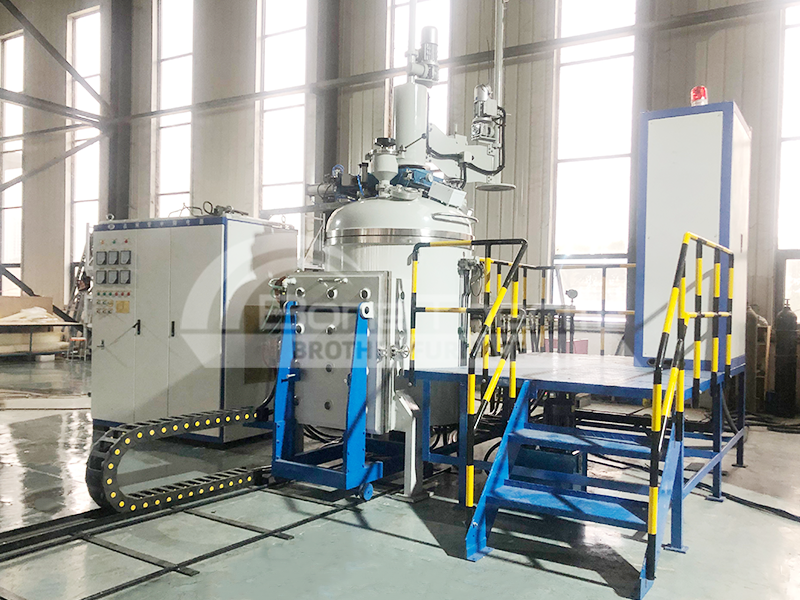
The furnace’s vacuum system—usually a combination of mechanical, roots, and diffusion pumps—evacuates the chamber. This removes air, oxygen, nitrogen, and water vapor, bringing the chamber to the required vacuum level.
Next, the metal charge is loaded into a refractory crucible inside the chamber. These crucibles are typically made of magnesia, alumina, or zirconia because they can withstand extreme temperatures and won’t chemically react with the molten metal.
2. Heating Stage: Electromagnetic Induction Heat Generation
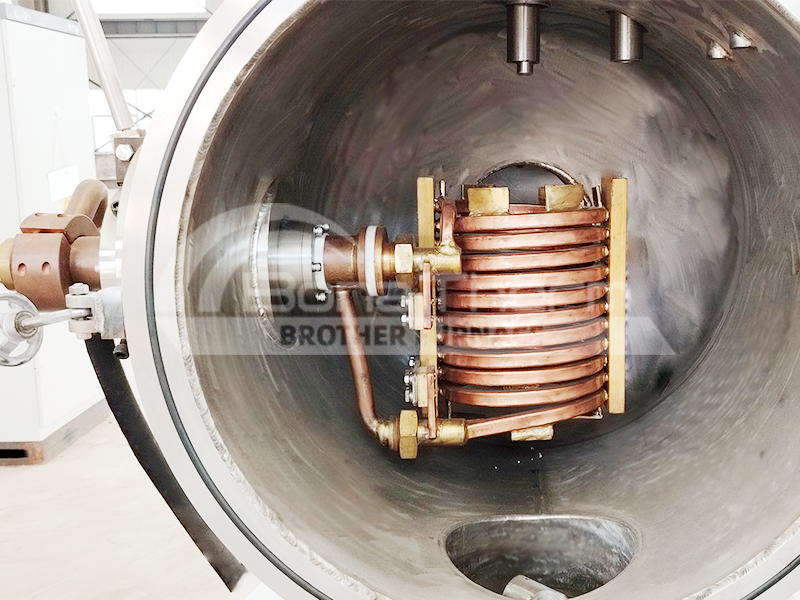
Once the required vacuum level is reached, alternating current is supplied to the water-cooled copper induction coil wound around the crucible, generating a strong alternating magnetic field that penetrates the crucible and acts on the metal inside.
According to the principle of electromagnetic induction, this alternating magnetic field induces eddy currents in closed loops within the conductive metal. When these eddy currents overcome the metal's resistance and flow, they generate a large amount of heat through the Joule effect, thus heating the metal from the inside out.
3. Refining Stage: Impurity Removal and Composition Homogenization
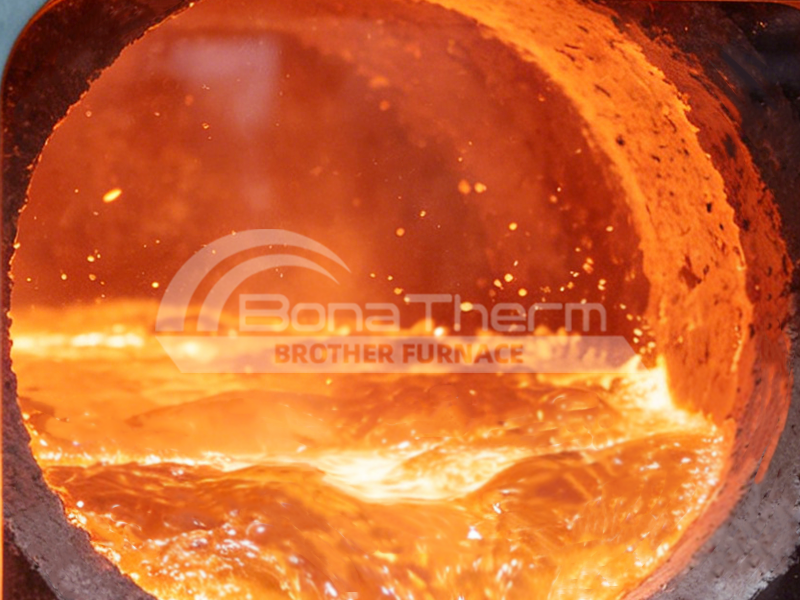
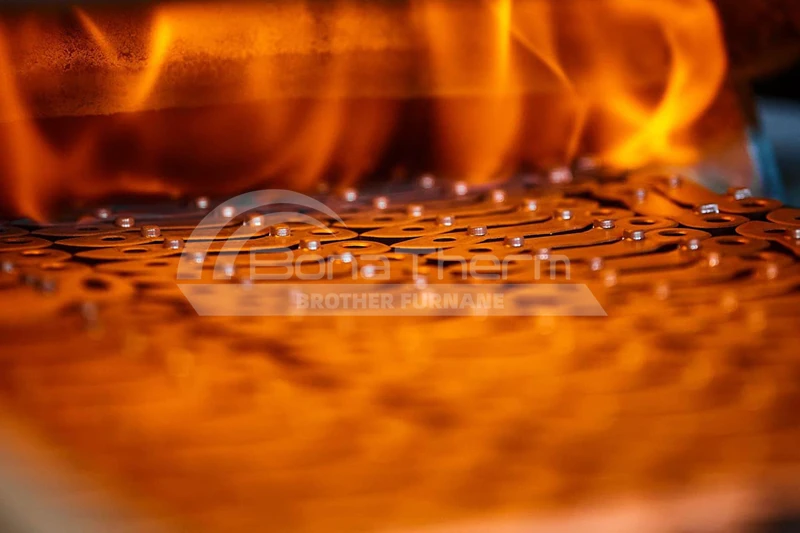
As the metal melts into a liquid, the vacuum environment becomes crucial for refining. The high vacuum prevents the molten metal from oxidizing and encourages the volatilization of high-vapor-pressure impurities. It also facilitates degassing, removing dissolved gases like hydrogen and oxygen from the molten metal.
4. Casting Stage: Molding of Molten Metal
After refining, the molten metal is adjusted to the optimal casting temperature. The chamber is tilted with a tilting mechanism, and the molten metal is poured through a pouring system into a prepared mold to solidify.
Once casting is complete, the vacuum system shuts down, the chamber is vented to atmospheric pressure, and the product is left to cool and solidify.
Key Advantages of the Vacuum Induction Melting Furnace
Due to its unique working principle, the VIM furnace offers distinct advantages over traditional melting equipment—which is why it’s widely used in high-end metal processing:
High product purity: The vacuum environment effectively prevents oxidation and contamination, guaranteeing the purity of metals and alloys.
Efficient energy use: Electromagnetic induction directly heats the metal, achieving 60%-70% energy conversion efficiency and minimal heat loss.
Precise control: The electrical system accurately adjusts temperature, vacuum levels, and heating rates to meet diverse melting needs.
From vacuum generation to melting, refining, and casting, every step prioritizes efficiency and quality.
Medium-frequency induction heating has become the dominant trend, playing an irreplaceable role in the rapidly developing aerospace, new energy, and other fields.
- Pre: Why Graphite Reigns Supreme in Vacuum Furnace Chambers?
- Next: Sorry!