Why Graphite Reigns Supreme in Vacuum Furnace Chambers?
- By: Brother Furnace
- 2026-04-10 00:56
Have you ever wondered how the furnace lining of a vacuum furnace is chosen? What material silently endures the high temperatures? It’s very likely graphite. In the demanding field of high-temperature vacuum processing, graphite is not only the ideal choice but often the only option for high-temperature heating elements.
But why is this? Why has this hard, dark-colored material become the preferred material for various processes such as sintering, brazing, and heat treatment? Why has the vacuum graphite furnace become the first choice for materials ranging from aerospace alloys to cutting-edge ceramics? Let’s find out…
Graphite’s Ultra-High Melting Point
Materials requiring high-temperature processing often demand extremely high temperatures and stable homogeneity, typically exceeding 2000°C, and must undergo rapid thermal cycling.
Therefore, the ideal furnace material must be like a superhero: possessing exceptional heating performance, extreme stability, and unparalleled toughness.
Compared to graphite, most metals melt or evaporate at temperatures above 2000°C. Ceramics can be brittle. However, graphite, with its unique properties, perfectly meets these requirements.
Key Advantages of Graphite: Performance Analysis
1. High Temperature Resistance
Graphite not only withstands high temperatures but thrives at them. With a sublimation point exceeding 3600°C, graphite retains its solid state and structural integrity at temperatures at which most materials would melt into droplets or gas.
This is crucial for vacuum furnaces that typically operate between 1200°C and 2500°C.
2. Thermal Shock Resistance
This is where graphite’s true advantage lies. Imagine raising the furnace temperature from room temperature to 1500°C in minutes.
Most materials would crack under such rapid expansion pressure. However, graphite has an extremely low coefficient of thermal expansion. It hardly expands or contracts when heated or cooled.
This natural resistance to thermal shock is essential for improving production efficiency and extending furnace life.
3. Natural Heating Material
In a vacuum environment, convection heating fails, and thermal radiation becomes crucial for providing heat. Graphite is an excellent radiant heater. When an electric current passes through it, it heats up evenly and emits light, providing uniform radiant heat to the workpiece.
Crucially, graphite has a very low vapor pressure. Simply put, it does not easily vaporize in a vacuum. This is essential. You cannot allow furnace material to evaporate and contaminate your precious workpiece…
4. Graphite also offers the advantage of ease of processing
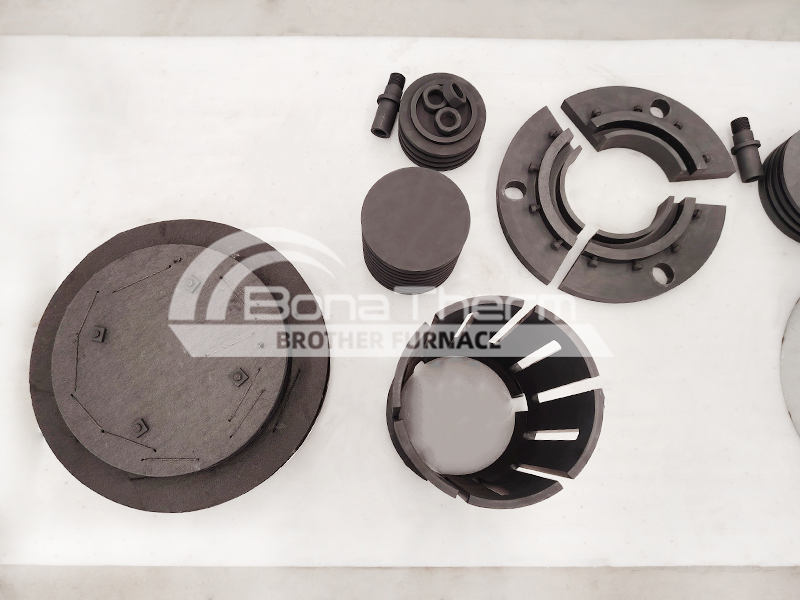
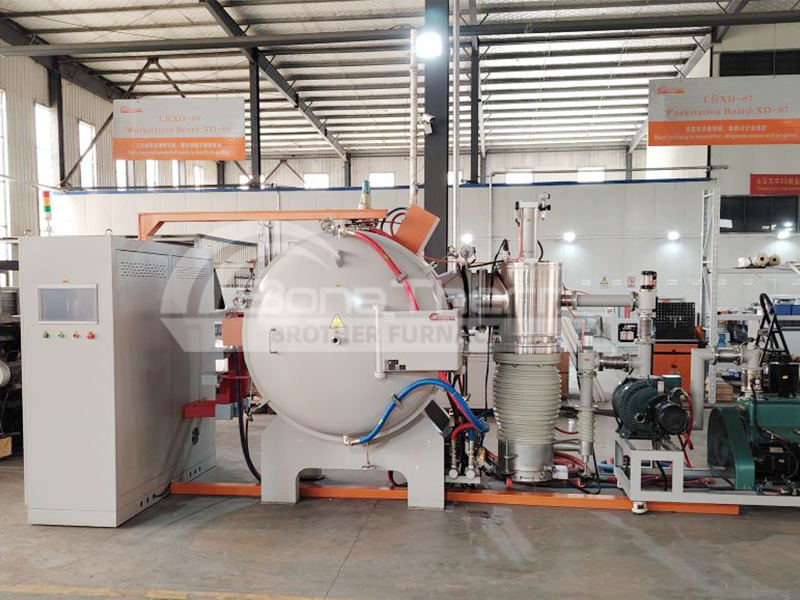
Perhaps you need a more complex heating element design? Compared to furnace linings made of other materials, graphite is relatively easier to process into various complex shapes. This design flexibility allows engineers to create hot zones with excellent temperature uniformity, a key factor in advanced heat treatment processes.
Precautions:
While graphite has many advantages, it is not a perfect material.
Understanding the properties of graphite is key to extending its service life.
Brittleness: Graphite is not a structural metal. It is easily shattered or fractured by mechanical impact, therefore requiring careful handling.
Contaminant Adsorbent: Graphite’s porous nature allows it to absorb oil and moisture from the air. After the furnace is turned on, a proper baking cycle must be performed to remove these contaminants and restore a clean process environment.
Graphite vs. The Alternatives
You may have heard of other materials such as molybdenum or tungsten. So, why choose graphite?
vs. Molybdenum: Mo has excellent properties, but it becomes brittle after repeated cycling and is much more expensive. Graphite has better thermal shock resistance and is more cost-effective in most applications.
vs. Tungsten: Tungsten has a higher melting point but extremely high density, is expensive, and more difficult to process. For many industrial processes, it is often overkill.
For the vast majority of high-temperature vacuum applications, graphite achieves a perfect balance between performance, processability, and cost.
If you need to choose a high-precision vacuum furnace
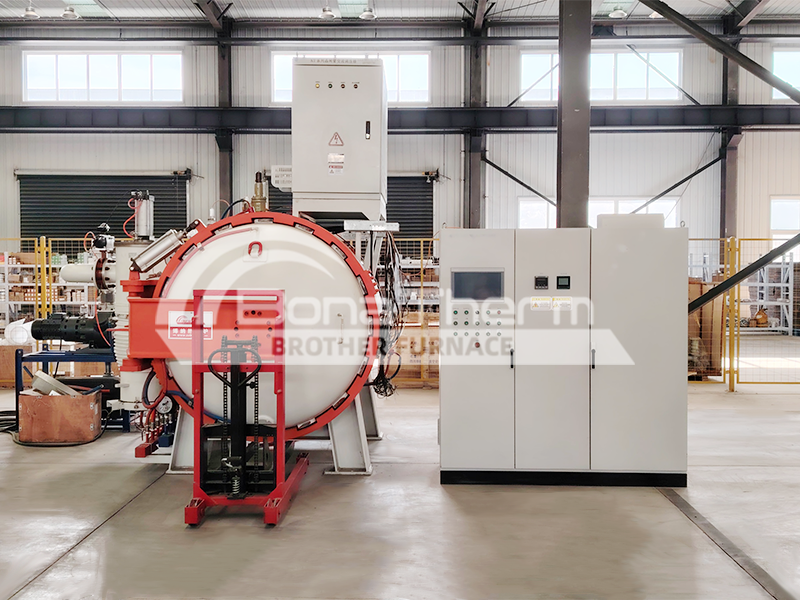
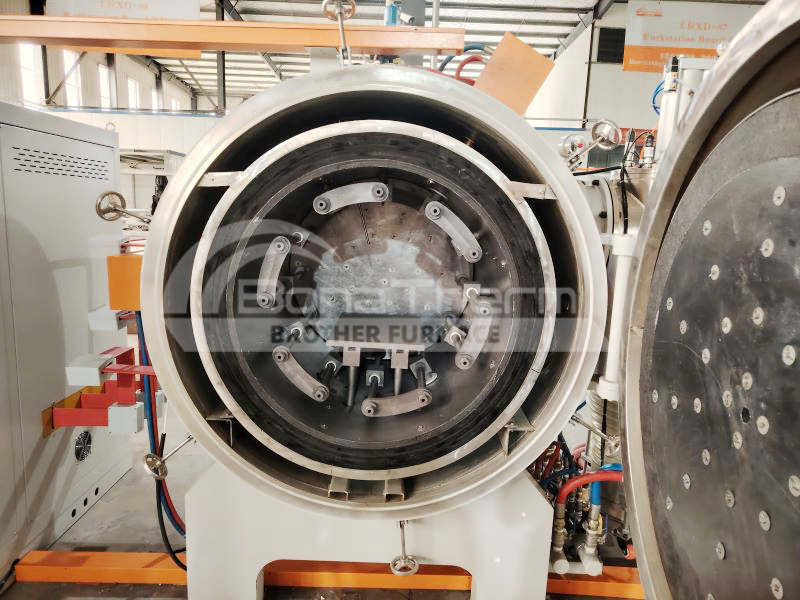
Graphite hot zone vacuum furnaces are not just a technical specification, but also a consideration of reliability and quality. This furnace lining material provides:
Rapid heating and cooling cycles without concerns about cracking.
Excellent temperature uniformity ensures consistent product performance.
With proper maintenance, it has a long service life, significantly reducing long-term operating costs.
This seemingly ordinary graphite furnace lining is a masterpiece of materials science, silently supporting the advanced manufacturing processes within the furnace.
For more technical parameters of our vacuum graphite furnaces, contact us for further information.