
Email Us
Vacuum Cutting-Tools Brazing Furnace
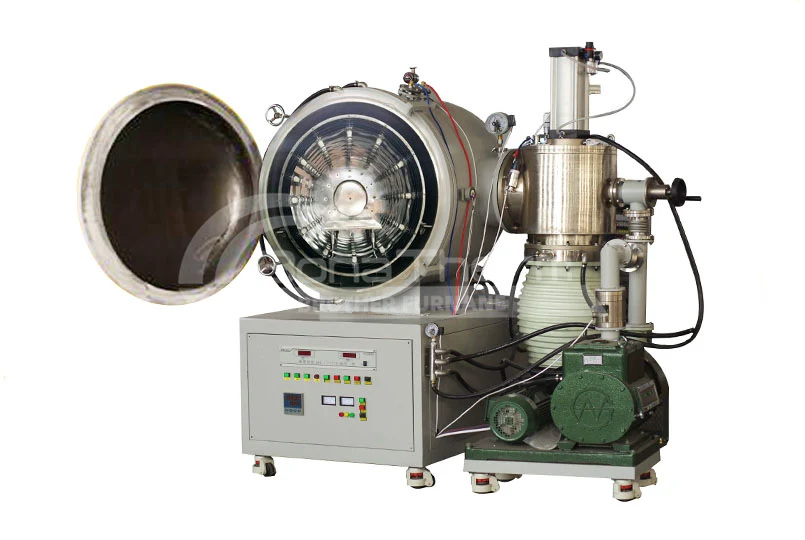
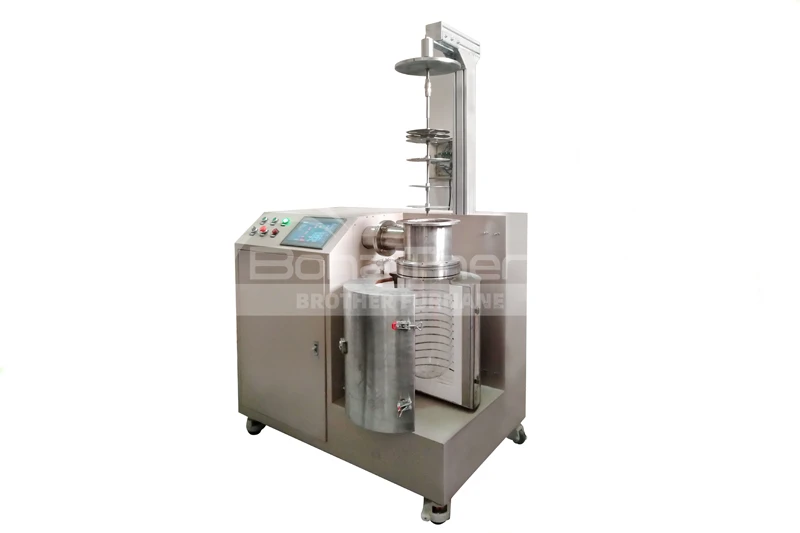
Brother furnace's vacuum cutting-tool brazing furnace is widely used in the welding of various smaller-sized superhard materials, mainly used for carbide tools (PCD tools, PCBN tools, CVD tools, CBN tools, engraving knives, etc.), drilling bits, stainless steel brazing, single crystal welding, porcelain metal brazing, heterogeneous metal components, complex thin plates: mezzanine components, honeycomb structures, etc.
Brother Furnace
Structural features of
Vacuum Cutting-Tool Brazing Furnace
Starting from the internal structure, we show you the unique design logic of vacuum cutting-tool brazing furnace products:
-

Chamber and heating
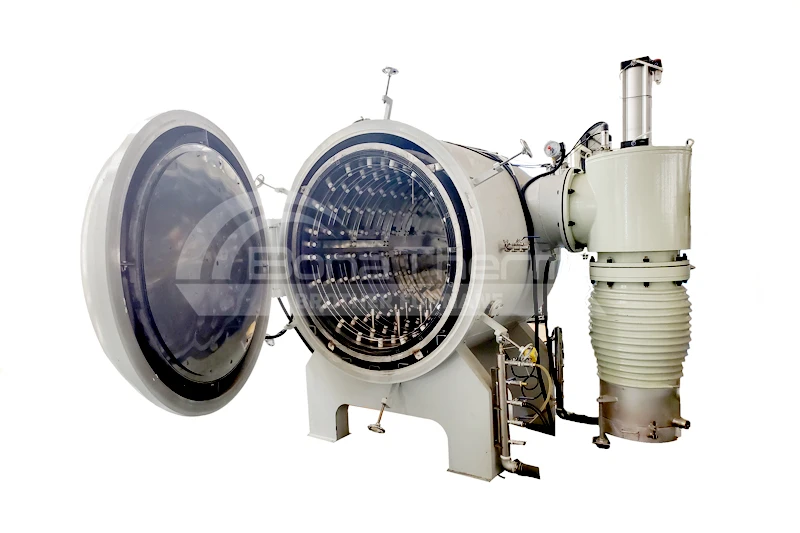
Adopting ring and bottom heating, the welding strength is high, which is 2-3 times that of ordinary high-frequency brazing.
-

Vacuum system
Direct-connect pump + diffusion pump vacuum unit.
-

Appearance design
Double-layer stainless steel material table allows brazing materials to be placed in an orderly manner.
-

Control system
Temperature curve and vacuum curve can be exported. PLC full control, can also switch to manual control, 10-inch high-definition touch screen, 50-segment program storage, simple operation, and continuous production.
Brother Furnace
Application features of
Vacuum Cutting-Tool Brazing Furnace
Focusing on actual scene applications, we will highlight the advantages of vacuum cutting-tool brazing furnace equipment functions for you:
-
The ultimate vacuum degree
7x10⁻³pa.
-
The maximum temperature
1200℃
-
Capacity quantity
The number of pieces welded in a single operation can reach more than 600 pieces.
-
Security system
Upper limit alarm, deviation alarm, automatic stop at the end of program operation, no need for human supervision.
Brother Furnace
Application industry of
Vacuum Cutting-Tool Brazing Furnace
Vacuum cutting-tool brazing furnaces can cover multiple fields and demonstrate their cross-industry adaptability and practical value:
-

Metalworking and machine tool industry
-

Aerospace industry
-

Automobile and auto parts manufacturing industry
-

Mold and precision manufacturing industry
-

Medical device industry
Brother Furnace
Applied Materials of
Vacuum Cutting-Tool Brazing Furnace
Aiming at the characteristics of various materials, the core advantage of the product is its compatible processing:
-

Stainless steel
-

Carbon steel
-

Alloy steel
-

High-speed steel
-

Copper and copper alloys
-

Aluminum and aluminum alloys
-

Titanium alloys
-

PCD tools
-

PCBN tools
-

CVD tools
-

CBN tools
-

Engraving tools
-

Dissimilar metal components
-

Complex thin plates
-

Mezzanine components
-

Honeycomb structures
Brother Furnace
FAQ
Focus on answering common questions to provide users with clear and practical usage guidelines:
-
Q:Can the manufacturer provide brazing process support?
A:Yes, the vacuum tool brazing furnace manufacturer typically has years of experience and technical support, and can tailor brazing processes to meet your needs, providing you with high-quality products and services.
-
Q:What is the load capacity of the equipment in a single brazing cycle?
A:Brother Furnace's vacuum tool brazing product features a double-layer stainless steel feed table, offering high production capacity, capable of brazing over 600 pieces in a single cycle.
-
Q:Can the equipment export process data?
A:Yes, the vacuum tool brazing equipment can export temperature and vacuum profiles for process monitoring and analysis, helping you optimize process parameters.
Brother Furnace
Parameters of
Vacuum Brazing Furnace
Present performance details with accurate data, intuitively showing the core technical specifications of the vacuum cutting-tool brazing furnace:
| Types | Maximum Temperature(℃) | Heating Zone (Diameter x Height)mm |
Overall dimensions(mm) | Power(KW) | Thermocouple |
|---|---|---|---|---|---|
| BR-200BF | 1200 | Φ200X400 | 1235X1150X750 | 8 | K type |
Brother Furnace
Vacuum Cutting-Tools Brazing Furnace
Production Process
Control of all links from raw materials to finished products:
-
1.Materials:
Stainless steel sheets and high-temperature-resistant alloys are selected, meeting vacuum sealing and load-bearing standards.
-
2.Cutting:
Cut raw materials according to design drawings using specialized equipment to ensure dimensional tolerances.
-
3.Press Brake:
Bends and forms the sheet metal, processing the furnace shell and chamber components with a bending angle accuracy of ±1°.
-
4.Machining:
Lathes are used to process precision components such as flanges and connectors, ensuring surface roughness control.
-
5.Welding:
Weld the furnace body welds, ensuring airtightness on key components, and perform post-weld inspection.
-
6.Steel sheet Metal:
Grinds and trims welded components to ensure a smooth appearance without sharp edges.
-
7.Painting:
Electrostatically sprays the furnace shell and dries it.
-
8. Assembly:
Install the vacuum system, heating element, temperature control module, cooling system, and tighten connectors.
-
9.Testing:
Conduct vacuum tests, temperature rise tests, and safety checks.
-
10.Packaging:
Internally cushioned with pearl cotton, externally covered with waterproof film and wooden crates, with anti-collision markings and equipment parameter labels.