
Email Us

Vacuum Annealing Furnace
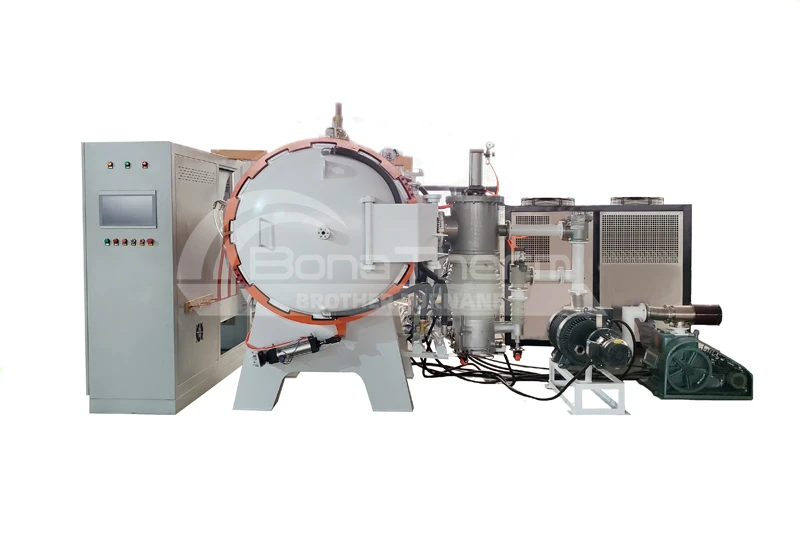
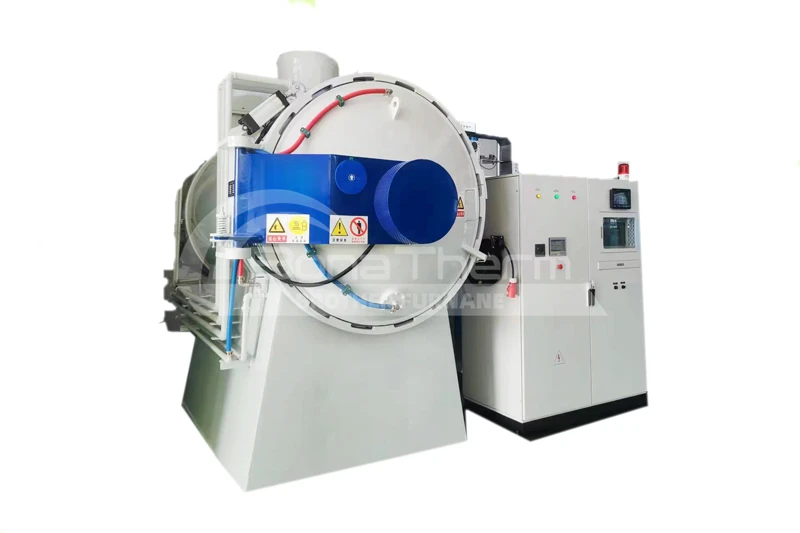
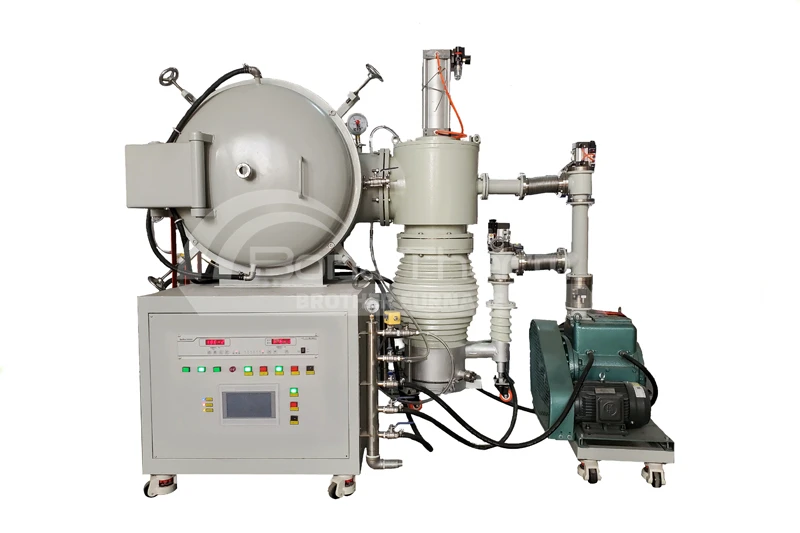
The vacuum annealing furnaces are used to anneal metals in a vacuum environment. They heat the workpiece through precise temperature control and then slowly cool it. This prevents oxidation and decarburization, ensuring a smooth surface. They also eliminate internal stress, refine grains, and improve toughness and processing performance. They can process stainless steel, titanium alloys, and elastic alloys.
Brother Furnace
Structural features of
Vacuum Annealing Furnace
Starting from the internal structure, we show you the unique design logic of vacuum annealing furnace products:
-

Chamber and heating
The chamber is made of ceramic fiber.
Silicon molybdenum rod for heating.
According to the length of the heating zone, multiple temperature zones can be controlled.
-

Vacuum system
Two-stage rotary vane mechanical pump and Roots pump unit.
-

Appearance design
The trolley-type furnace bottom is electrically driven in and out, which allows for loading and unloading of materials outside the furnace and facilitates maintenance of the furnace.
-

Control system
PLC automatic control system, the human-machine interface adopts high-definition touch screen, and has a built-in operating system developed by us.Programmable temperature control instrument PID adjustment.
Brother Furnace
Application features of
Vacuum Annealing Furnace
Focusing on actual scene applications, we will highlight the advantages of vacuum annealing furnace equipment functions for you:
-
The ultimate vacuum degree
7x10⁻¹pa.
-
The maximum temperature
1600℃
-
Pneumatic design
Special gas path design: High-purity nitrogen undergoes deoxidation and dehydration treatment, enters the furnace through the gas path, and is then discharged through the exhaust port extending to the furnace, ensuring effective circulation of nitrogen in the chamber.
-
Security system
Upper limit alarm, deviation alarm, automatic stop at the end of program operation, no need for human supervision.
Brother Furnace
Application industry of
Vacuum Annealing Furnace
Vacuum annealing furnaces can cover multiple fields and demonstrate their cross-industry adaptability and practical value:
-

Electronics and information industry
-

Metallurgy industry
-

Ceramics industry
-

New energy industry
-

Scientific research field
-

Military industry
Brother Furnace
Applied Materials of
Vacuum Annealing Furnace
Aiming at the characteristics of various materials, the core advantage of the product is its compatible processing:
-

Tungsten
-

Molybdenum
-

Titanium
-

Zirconium
-

Nickel-based superalloys
-

Cobalt-based superalloys
-

Elastic alloys
-

Tungsten-copper alloys
-

Alumina ceramics (Al₂O₃)
-

Silicon nitride ceramics (Si₃N₄)
-

Silicon carbide ceramics (SiC)
Brother Furnace
FAQ
Focus on answering common questions to provide users with clear and practical usage guidelines:
-
Q:What is the basic process for vacuum annealing?
A:First, evacuate to the target vacuum level. Then, heat the workpiece to the annealing temperature according to a set curve and hold the temperature. Finally, slowly cool it to room temperature. Maintaining the vacuum environment throughout the entire process ensures stable material properties.
-
Q:Will the workpiece surface change after annealing?
A:This bright annealing process leaves the workpiece surface free of oxidation and decarburization, maintaining a smooth finish. No subsequent treatments such as pickling or polishing are required. This process is particularly suitable for precision parts or workpieces that require direct assembly.
-
Q:What determines the holding time for vacuum annealing?
A:It's primarily based on workpiece thickness, material thermal conductivity, and the annealing objectives (such as stress relief and grain refinement). Generally, the thicker the workpiece and the lower the thermal conductivity, the longer the holding time.
Brother Furnace
Parameters of
Vacuum Annealing Furnace
Present performance details with accurate data, intuitively showing the core technical specifications of the vacuum annealing furnace:
| Types | Furnace Size (Width x Height x Depth)mm |
Working Temperature(℃) | Number Of Temperature Zones | Power(KW) | Power Supply(V) |
|---|---|---|---|---|---|
| BR-VAF-4412 | 400X400X1200 | 1600 | 3 | 60 | 380 |
| BR-VAF-6616 | 600X600X1600 | 1600 | 3 | 105 | 380 |
| BR-VAF-6623 | 600X600X2300 | 1600 | 4 | 130 | 380 |
| BR-VAF-7730 | 740X740X3000 | 1600 | 4 | 200 | 380 |
Brother Furnace
Vacuum Annealing Furnace
Production Process
Control of all links from raw materials to finished products:
-
1.Materials:
Stainless steel sheets and high-temperature-resistant alloys are selected, meeting vacuum sealing and load-bearing standards.
-
2.Cutting:
Cut raw materials according to design drawings using specialized equipment to ensure dimensional tolerances.
-
3.Press Brake:
Bends and forms the sheet metal, processing the furnace shell and chamber components with a bending angle accuracy of ±1°.
-
4.Machining:
Lathes are used to process precision components such as flanges and connectors, ensuring surface roughness control.
-
5.Welding:
Weld the furnace body welds, ensuring airtightness on key components, and perform post-weld inspection.
-
6.Steel sheet Metal:
Grinds and trims welded components to ensure a smooth appearance without sharp edges.
-
7.Painting:
Electrostatically sprays the furnace shell and dries it.
-
8. Assembly:
Install the vacuum system, heating element, temperature control module, cooling system, and tighten connectors.
-
9.Testing:
Conduct vacuum tests, temperature rise tests, and safety checks.
-
10.Packaging:
Internally cushioned with pearl cotton, externally covered with waterproof film and wooden crates, with anti-collision markings and equipment parameter labels.